How to Choose a Frontal Hair Patch: A Complete Guide
Written by
Megan Brooks
Last modified
SHARE ON
Table of Contents
Contact our specialists now for Hair Replacement!
Share this article
Introduction
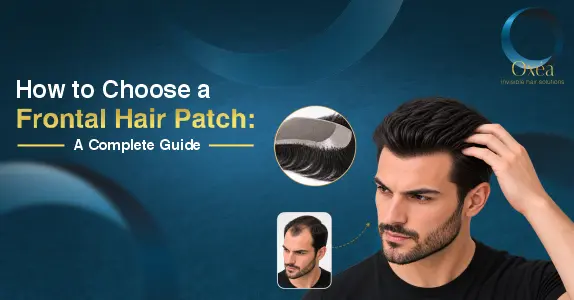
If your hairline has started to thin or recede at the front, you don’t always need a full hair system to fix it. A frontal hair patch covers just that area, blending into your own hair at the sides and back. It’s smaller and covers less than a full system, so choosing the right one takes a slightly different approach.
That choice comes down to a few things: the base material, how it’s attached, how well it matches your own hair, and how it holds up day to day. Get these right and a frontal patch is hard to spot. Get it wrong, and even a well-made patch can look obvious rather than natural.
Quick Summary
A frontal hair patch is a small piece that covers hairline or temple thinning, without replacing all your hair. The right one depends on the base material, how it's attached, how well it matches your natural hair, and whether it's fitted by a professional. Human hair, a good match and a proper fit matter more than price for a natural look.
What Is a Frontal Hair Patch?
A frontal hair patch is a small hair patch that sits at the front of your scalp, usually covering the hairline, temples, or the area just behind them. It doesn’t cover your whole scalp, so it’s built to blend with the hair you still have at the sides, back and crown. That makes it a common choice for men whose hair loss is mostly at the front.
That smaller size changes how it’s made, too. The patch is made from human hair, tied or injected onto a thin base, then attached with tape, adhesive, or clips. Because it only covers a small area, small details like the base, the hairline design and how well it blends matter more than they would on a bigger piece.
How Is a Frontal Patch Different From a Full Hair System?
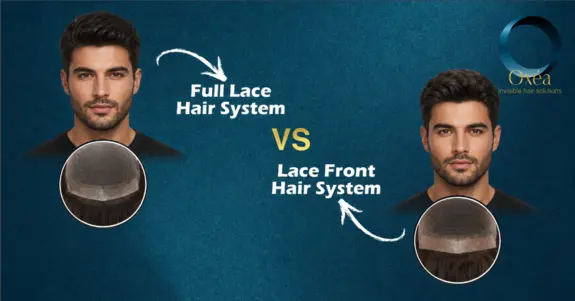
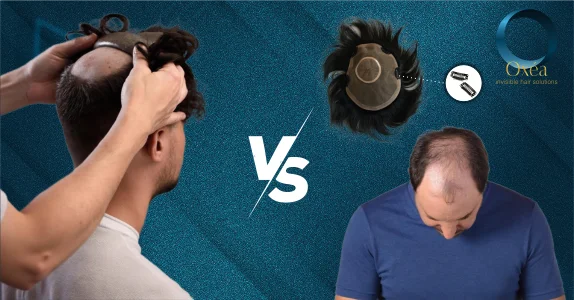
A full hair system covers your whole scalp. A frontal patch only covers the front, so your own hair carries the rest of the look. This means a frontal patch usually costs less, since it uses less material. It also needs to match your existing hair closely, since it sits right next to it rather than replacing it, so any mismatch in colour or texture is more noticeable.
How Do You Know if a Frontal Patch Is Right for You?
A frontal patch works best when you’re dealing with hairline or temple hair loss and the hair further back is still healthy. It lets you cover the area you need without touching hair you don’t.
If your thinning has spread across the crown or the whole scalp, a frontal patch on its own won’t give even coverage, and a full system usually works better.
It also comes down to how you plan to wear it. Some men want a patch for daily wear, others only for certain occasions or while they weigh up other options. Either is a reasonable starting point, but it’s worth being clear on which one applies to you, since it affects which base material and attachment method will suit you best.
How Is a Frontal Patch Measured and Fitted?
Getting the measurements right is what makes a frontal patch look seamless. Because it sits against your own hairline, even a few millimetres off can throw the whole look.
That precision starts with the fitting itself. A proper fitting measures the width, the depth from the hairline back, and the curve at the temples, since most hairlines aren’t a straight line. Your natural hair colour, texture and growth direction are checked too, because the patch needs to match all three.
With that much to get right, professional fitting rather than applying it yourself is usually the safer approach. A patch that’s slightly too big or small will show at the edges, and colour is hard to match without an in-person check.
A ruler can tell you a width or a length, but it can’t tell you how your hairline curves at the temples or which way your hair actually grows. Those are the details that make a frontal patch look like it’s yours, not something sitting on top of your head, and they’re almost impossible to judge accurately on yourself.
~ Megan Brooks
Get professional guidance on measuring and fitting your frontal hair patch.
Which Base Material Works Best for a Frontal Patch?
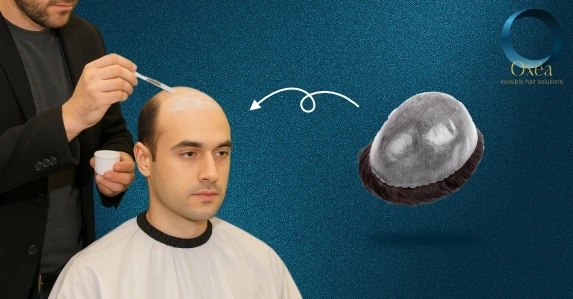
The base is what the hair is attached to, and it affects how natural your hairline looks and how comfortable the patch feels. For a frontal patch, the main options are skin, lace, or a mix of both.
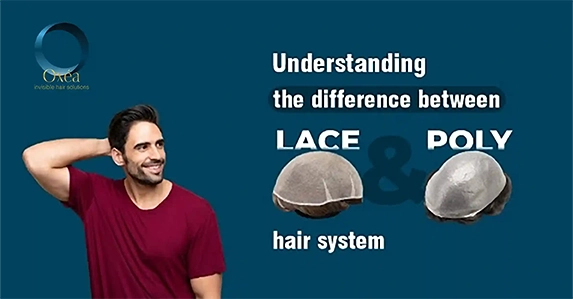
A skin base gives a very natural scalp look right at the hairline, which is why it’s popular for frontal patches. Lace is lighter and more breathable, and a well-made lace hairline can look just as natural, though it doesn’t last quite as long. Some patches use both: lace at the very front for the softest hairline, and a stronger base further back.
Which one’s right for you comes down to your lifestyle, how much you sweat, and whether you’d rather have a softer or more durable hairline. It’s worth talking through with someone who can look at your hairline and habits directly.
How Do You Match Density, Colour and Hair Direction at the Hairline?
Colour matching is the obvious one, but density and hair direction matter just as much, and they’re the two things people tend to overlook.
Density is how much hair is packed into the base. A patch that’s denser than your natural hair looks unnaturally thick at the hairline, and that’s often what gives it away. Matching the density to your own hair gives a more natural result.
Hair direction matters too: your hair doesn’t grow straight down in one direction, and neither should the patch.
What's the Most Common Mistake People Make When Blending a Frontal Patch?
The biggest mistake is combing the hair straight down or back without matching how your natural hair actually grows at the hairline. This creates a hard line right where the patch meets your own hair.This creates a hard line where the patch meets your natural hair.
Most hairlines fan out slightly rather than growing in one direction. A patch styled to match that pattern blends far better than one brushed the same way every day, regardless of how your hair actually grows.
Which Attachment Method Suits a Frontal Patch Best?
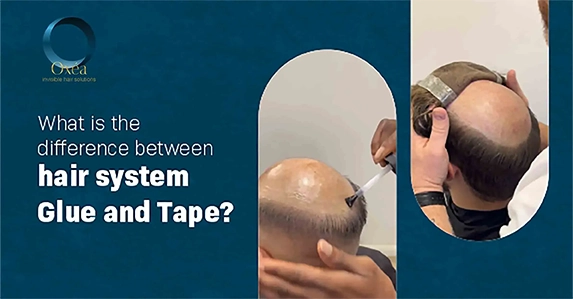
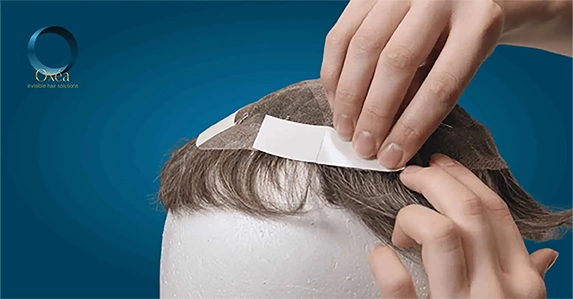
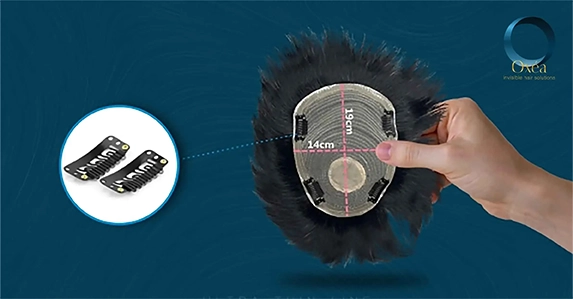
The three main options are tape, adhesive (glue), and clips. Tape and adhesive give a stronger, longer hold, which suits daily wear, but they need proper application and regular reattachment as the bond wears down. Clips are easier day to day, simple to put on and take off yourself, which suits occasional wear, but they don’t hold up as well to daily use.
There’s no single best method. It depends on how often you’ll wear the patch and how much upkeep you’re happy to do. What matters most is getting it applied the first time properly, since a poorly applied tape or adhesive job is one of the more common reasons a patch lifts or looks obvious sooner than it should.
Human Hair or Synthetic: Which Is Right for a Frontal Patch?
Both have their place, but they behave differently at the hairline, which is a more visible area than the rest of a hair system.
Human hair moves and catches the light the way your own hair does, and it can be washed, styled and even coloured. That matters at the front, where the patch needs to keep matching your hair as you cut or style it over time.
For a frontal patch, this is what makes the difference between a patch that blends in and one that stands out. It’s worth choosing hair that can be treated the same way as the hair around it, especially in an area people look at closely.
A few things drive the price up or down. Base material is a big one: lace, skin and combination bases all take different amounts of skilled work. Human hair costs more than synthetic.
Customisation, matching your exact colour, density and hairline shape rather than choosing a ready-made option, adds to the price too, and ongoing maintenance is worth factoring in alongside the upfront cost.
Because price depends on your hairline, hair type and chosen base, it’s not something that can be given as one figure for everyone. A consultation is the most accurate way to get a price based on what you actually need.
How Do You Keep a Frontal Patch Looking Undetectable?
Keeping a frontal patch looking natural is mostly about regular, gentle care. Cleaning it with the right products stops build-up that can make the hairline look dull. Detangle gently from the ends rather than the root, and go easy on heat styling.
That’s because the hairline gets more wear than the rest of a system, from washing, sleeping and general movement, so it needs a bit more attention than the rest. If you’re using tape or adhesive, regular touch-ups keep the bond secure and stop the edges lifting, which is usually the first sign a patch needs attention.
Where Can You Get a Frontal Hair Patch Fitted in London?
If you’re in London, it’s worth choosing somewhere with trichologists who specialise in this rather than a general salon offering it as an extra. Oxea London has been fitting hair systems since 2004, and the team was named Hair Loss Specialist of the Year at the British Beauty Awards 2024.
Oxea has two London studios, in West Kensington and the City of London, both run by certified trichologists and hairstylists who measure, match and fit a frontal patch in person. That in-person step makes the difference between a patch that blends in and one that doesn’t.
Conclusion
Choosing a frontal hair patch comes down to a few decisions: whether your hair loss suits a frontal patch over a full system, which base material fits your lifestyle, how closely the density, colour and hair direction match your own hair, and which attachment method you’re happy to maintain. Get those right and a frontal patch is one of the more natural-looking, low-commitment ways to deal with hairline thinning.
None of these decisions need to be made alone. A proper consultation with a qualified trichologist covers measurement, matching and material in one sitting, which is a lot harder to get right by trial and error at home.
A proper consultation with a qualified trichologist covers measurement, matching and material in one visit.
A frontal patch only covers the hairline and front of your scalp, blending into your own hair at the sides and back. A full hair system covers your whole scalp.
Yes, if it’s attached with tape or adhesive and fitted properly. Daily wear is one of the more common uses for a frontal patch, though it does mean sticking to a regular cleaning and reattachment routine.
Not when the base, colour, density and hair direction are properly matched and it’s applied by someone experienced. Most patches that look obvious come down to a mismatch in one of these areas.
Yes. Human hair patches can generally be cut, styled and coloured much like your own hair, so it’s easy to keep the patch matching as your style changes.
It depends on the base material, whether you choose human or synthetic hair, and how customised the fit is. Because it varies from person to person, a consultation is the most accurate way to get a price based on your actual hairline and hair type.
Megan Brooks is a Certified Trichologist at Oxea Invisible Hair Solutions with over 21 years of Unbeatable experience. Throughout her remarkable career, she has successfully completed an impressive 8000+ hair replacement systems. Megan is dedicated to transforming lives and boosting self-confidence so that one can live with all the pride. She has served over 800 satisfied clients and still-counting, while helping them regain their natural appearance and feel their best.