Tape Vs Glue: Which Adhesive is Right For Men’s Hair Systems
Written by
Megan Brooks
Last modified
SHARE ON
Table of Contents
Contact our specialists now for Hair Replacement!
Share this article
Introduction
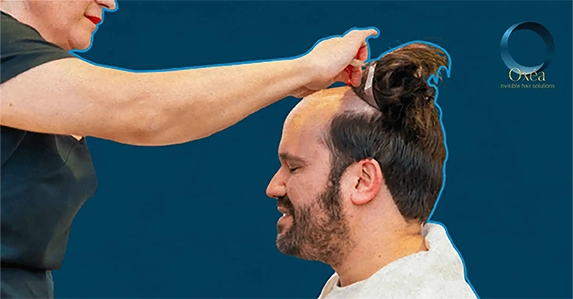
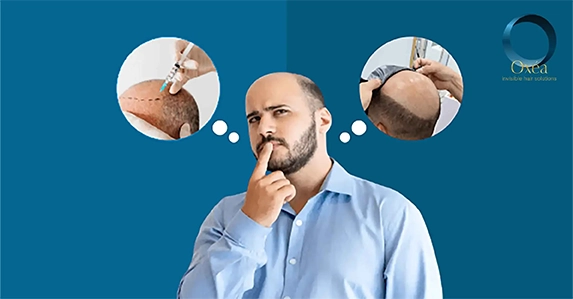
You have probably spent hours reading articles on the internet and watching videos about how to care for your human hair replacement system. The research seems to be done, you have also shortlisted the right hair system, and now you’re finally in the chair, ready for the attachment process.
That’s when the big question comes up: Tape or glue? And suddenly, you’re unsure which one is right for you.
Before making that choice, it’s important to understand your hair system’s base material and design. For example, if you’ve chosen a skin base, tape usually works better. If you’re going with a poly skin hair system, glue often provides a stronger and more natural hold.
This decision isn’t only about adhesion. It’s also about how you live your day.
In this blog, we’ll walk you through both options so you can choose what fits your hair system, comfort, and daily routine!
Key-Takeaways
Glue provides an undetectable hairline and stronger hold, ideal for skin or poly bases and exposed hairstyles.
Tape offers faster application, easier removal, and better breathability, suiting most base types and sensitive scalps.
Ultra-thin poly bases may tear with tape; glue is the safer adhesive option for these delicate systems.
The choice depends on prioritising a natural look and durability (glue) versus convenience and scalp comfort (tape).
What is Hair System Glue?
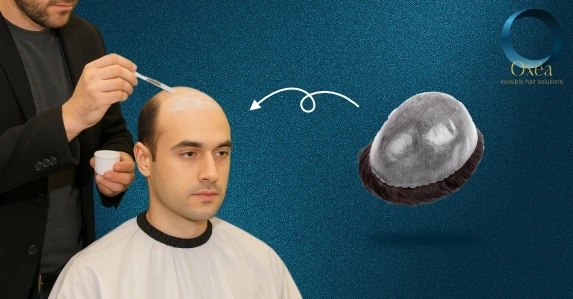
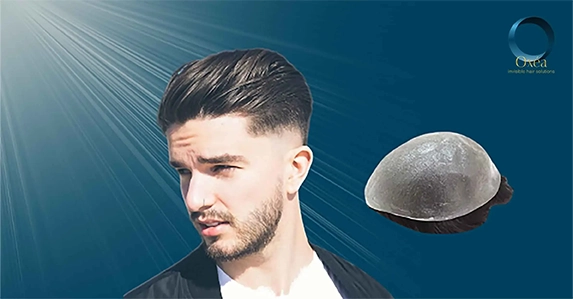
Hair system glue is a liquid adhesive applied directly to the scalp to secure a hair system, offering a thin, natural finish and a strong, long-lasting hold.
Hair system glue (also known as wig adhesive glue) is available in clear or white liquid form and is applied directly to the skin using a brush or applicator. Once dried, it creates a secure bond between the scalp and the hair system.
Glue-based attachments require more time and precision during application and cleaning. However, they are widely chosen for their minimal thickness, dull (non-shiny) finish, and accurate fit, particularly around the hairline. When used correctly, glue provides an undetectable front, especially with thin-skin or poly base, making it a preferred option for wearers who prioritise a natural look.
Advantages of Hair System with Glue
Hair system glue offers a stronger hold, a more natural hairline, and precise attachment control.
1. Long-lasting hold
Glue generally lasts longer than tape because it bonds directly with the skin, preventing air or moisture from breaking the bond. For extended wear, multiple thin layers can be applied to increase durability.
2. Invisible finish
Once used, hair system glue dries transparent and matte, leaving no visible shine. This creates a clean, natural-looking scalp appearance, particularly at the front hairline.
3. Accurate attachment control
Glue allows the wearer or hair system specialist to apply adhesive only where needed. This ensures a snug fit with no air pockets under the base, improving comfort and helping prevent water concerns during showers or swimming.
Disadvantages of Hair System with Glue
Glue requires more time, careful removal, and may not suit sensitive skin or lace bases
Disadvantages of hair system tape
Time-consuming application Unlike tape, glue needs proper drying time. Both under-drying and over-drying can weaken the bond, making timing critical for a secure attachment.
Slower removal process Removing glue takes patience. The hair system usually needs to be loosened with water or solvent, followed by residue removal, shampooing, and rinsing. This adds time to maintenance routines.
Not ideal for sensitive skin Glue adhesives contain a higher chemical content than tapes, which may irritate sensitive scalps. A patch test is always recommended before full application.
Unsuitable for mesh bases Liquid glue can seep through lace or mesh materials and affect both scalp comfort and hair quality. Glue is best suited to poly or skin bases rather than lace systems.
What is Hair System Tape?
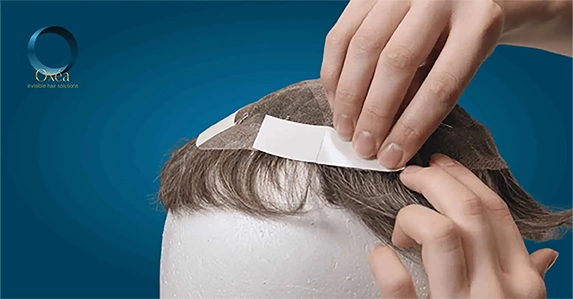
Hair system tape is a double-sided adhesive used to attach a hair system quickly, offering ease of use and clean removal.
Hair system tape features one sticky side that attaches to the hair system base and another designed to bond with the scalp or adhesive layer. Tape is widely preferred for its speed, simplicity, and low-maintenance removal.
While tape is thicker than glue and less suitable for creating an invisible front hairline, it remains one of the most practical attachment methods for everyday wear. Hair system tape is also among the lightest and least damaging adhesive options available.
Advantages of Hair System with Tape
Tape is easy to use, works with most bases, and allows faster attachment and removal.
Compatible with most hair system bases Tape works well with French lace, Swiss lace, skin bases, NPU, poly perimeters, and monofilament systems, making it one of the most versatile attachment options available.
Simple and time-saving Tape is far easier to handle than glue, significantly reducing installation time. It is especially useful for wearers or technicians who want a quick, clean attachment without complex drying stages.
Easy removal Tape can be peeled off directly from the base. If resistance is felt, a small amount of solvent loosens the adhesive easily, making maintenance straightforward.
More breathable feel Because tape does not coat the scalp directly, it allows better airflow compared to glue, improving comfort for many wearers.
Disadvantages of Hair System with Tape
Tape can be visible at the hairline and may damage very thin poly bases.
Not suitable for ultra-thin poly bases Very thin poly systems (around 0.08 mm) can tear during tape removal. In such cases, glue is often the safer option.
Less natural front hairline Tape is thicker than glue, making it more visible when used at the front edge. This can compromise realism, particularly for exposed hairline styles.
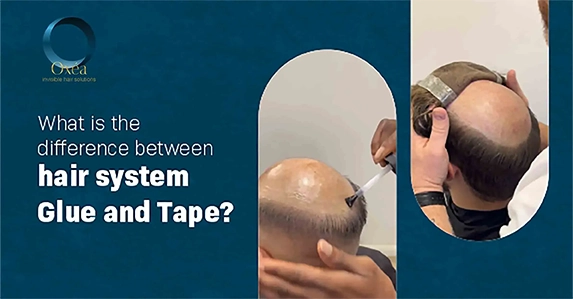
This is why, at your studio during booked appointments, attachment methods are demonstrated. Clients are shown how tape behaves on their base, under lighting, and with natural movement.
Tape Vs Glue: Which Adhesive is Right For Men’s Hair Systems
Deciding between hair system glue and tape all depends upon your preferences, always!
The glue has its benefits; it is stronger as it will firmly keep the wig or hair system on the head, is more natural-looking, and is ideal for super-thin hair systems. However, it will ask for constant care at the time of application and removal and might irritate sensitive scalps as well.
Whereas the tapes are easier to use and are gentler on the skin, but are thicker in nature and do not offer an undetectable look.
So overall, decide by considering your lifestyle and hair system material and design, where if you want that secure hold and undetectable look, glue is the way to go. If you prioritise convenience and scalp comfort, the tape could be better.
Use a combination of a silicone grip band and high-quality adhesive tape on the “anchor points” (temples and nape). This creates a multi-point security system that resists lifting.
Yes. Stress typically triggers shedding (telogen effluvium) first. If chronic, it can contribute to hormonal changes that accelerate follicle miniaturisation, particularly in those already genetically predisposed to pattern hair loss.
Check the root of fallen hairs for a white bulb (healthy shed). Compare the parting width photos over four weeks. Assess whether the new regrowth is as thick as your established hair. If density is progressively reducing, thinning is more likely than temporary shedding.
Shedding-related thinning often is, once the trigger is resolved. Genetic or follicle miniaturisation-based thinning is not easily reversed, but it can be slowed or addressed immediately with a non-surgical hair replacement system that delivers natural results from day one.
Both glue and tape have their own benefits that can secure the hair system perfectly. But again, the ideal choice depends on your very own needs and preferences.
For better assistance, you can contact Oxea London today. Our experienced team can help you assess your needs and advise you on the best adhesive methods for a natural, comfortable, and confident look!
Author Profile
Megan Brooks
Megan Brooks is a Certified Trichologist at Oxea Invisible Hair Solutions with over 21 years of Unbeatable experience. Throughout her remarkable career, she has successfully completed an impressive 8000+ hair replacement systems. Megan is dedicated to transforming lives and boosting self-confidence so that one can live with all the pride. She has served over 800 satisfied clients and still-counting, while helping them regain their natural appearance and feel their best.